
Home / Treatments / Implant exchange and capsular contracture
Breast
Implant exchange and capsular contracture – when a breast implant causes problems
Breast implants last a long time, but not necessarily a lifetime. If the capsule hardens, an implant is damaged or it no longer suits the body, an exchange may be advisable. Here you can read how to recognise this and how an exchange is carried out.
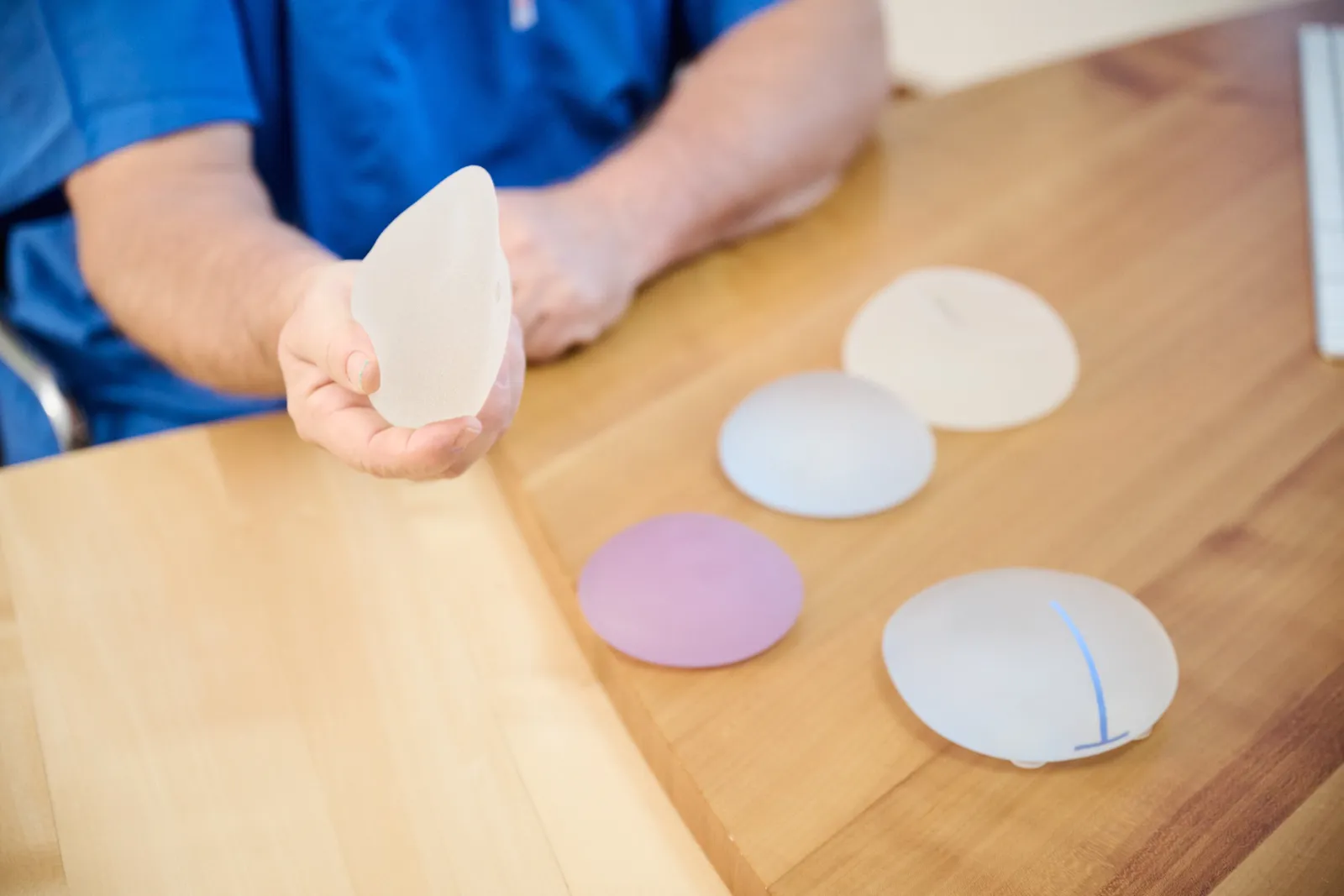
A breast implant is a medical device – high-quality, but not everlasting. Many women live with it for decades without any problems. For others, something changes over time: the breast becomes firmer, the shape shifts, an older implant has started to leak. Or life has changed, and after pregnancies, fluctuations in weight or with the years, the size no longer fits.
When an exchange may be advisable
- Capsular contracture: The connective tissue around the implant has hardened and contracted.
- Defective or aged implant: Older implants can wear out or rupture over time. Earlier models filled with saline often lose volume.
- Change in position: The implant has slipped or rotated – with anatomically shaped implants, this is visibly noticeable.
- Inflammation: An infection in the implant pocket may make removal necessary.
- Certain types of implant: For some textured implants, the approval was not renewed because of a rare risk of lymphoma (BIA-ALCL). Anyone with such implants should seek advice – but without symptoms, an exchange is not mandatory.
- Wish for change: larger, smaller, lighter or combined with a lift.
Capsular contracture: what lies behind it
The body surrounds every implant with a thin sheath of connective tissue – this is normal and desirable. In some women, however, this capsule becomes thick, hard and shrinks. Why this happens has still not been conclusively clarified; factors under discussion include subclinical inflammation caused by skin bacteria and bruising after the operation.
Typical signs are increasing hardening, a feeling of tension or pressure, pain, a changed shape or a new asymmetry between the two sides.
The four grades of severity according to Baker
| Grade | Findings | What is usually advisable |
|---|---|---|
| Baker I | soft, no palpable or visible change | no treatment, check-up |
| Baker II | slightly firm to the touch, unremarkable in appearance | observe, anti-inflammatory treatment if necessary |
| Baker III | clearly firm, visibly changed shape | treatment recommended |
| Baker IV | hard, deformed, often painful | surgical treatment |
In pronounced capsular contracture, the hardened capsule is removed surgically and the implant is replaced. The formerly common practice of “breaking” the capsule by pressure from outside is no longer recommended today.
What you can contribute yourself
- consistently follow the instructions after the operation, in particular wearing the support bra
- avoid smoking before and after the procedure as far as possible
- have bruising and signs of inflammation checked early
- attend regular follow-up check-ups
Process: preparation, procedure, aftercare
An exchange is more complex than the first implantation, because the old capsule is usually removed as well. The process is, however, similar to that of a breast augmentation. We decide on the place of the procedure during the consultation.
- 01a few weeks beforePreparation
Findings and imaging, planning of capsule removal, new implant and position, informed-consent discussion with time to reflect.
- 02day of surgeryProcedure
Operation under general anaesthesia, generally via the existing scar; followed by a support bra.
- 03weeks to monthsAftercare
Support bra for about six weeks, rest, check-ups; the final shape develops over a few months.
- Consultation and findings We discuss your symptoms and wishes. Documents on the first operation and the implant card are very helpful – please bring them with you.
- Imaging Depending on the question, ultrasound, and if necessary a mammography or MRI.
- Planning We decide whether the capsule will be removed completely or partially, which new implant is suitable and whether the position (above or below the muscle) should be changed. A lift or doing without a new implant are also options.
- Procedure Removed parts of the capsule can be examined histologically.
- Day 1–3feeling of tension and swelling; support bra day and night
- Week 1–2light activities usually possible again
- Week 3–6keep wearing the support bra, do not lift anything heavy
- Week 6–8intensive sport and heavy lifting possible again after consultation
- Months afterwardsthe final shape develops
Contact us immediately if you have swelling that increases on one side, severe pain, fever, redness or wound discharge.
An implant exchange is a good opportunity to reassess everything: size, shape, position – and whether you want an implant again at all.
Health insurance
If there is a medical reason for the exchange, please clarify a possible contribution to the costs with your health insurer on a case-by-case basis before treatment. In the case of an implant defect, it is also worth enquiring with the manufacturer, and anyone who has taken out follow-up cost insurance should check it. After the examination, you will receive an individual cost estimate.
Risks
An exchange also carries risks: secondary bleeding, infections, wound-healing problems, changes in nipple sensitivity, asymmetries and conspicuous scars. Capsular contracture can also develop again after an exchange. I will inform you about all these points in detail before the procedure.
Frequently asked questions
Do I have to have my implants exchanged after ten years?
No, there is no fixed date for replacement. Regular check-ups are important. An exchange is indicated if findings or symptoms speak in favour of it – or if you yourself would like to change something.
Will the exchange leave me with new scars?
The operation is usually performed via the existing scar. If a lift is performed at the same time, additional incisions are made – we discuss this precisely beforehand.
Can I simply have the implants removed?
Yes. Without an implant, however, the breast often looks emptier and more sagging than before the first operation. A simultaneous lift or an autologous fat treatment can mitigate this.
I no longer have my implant card. Is that a problem?
It makes planning more difficult but does not prevent the procedure. It is often possible to find out through the clinic at the time which implant was used.
How do I recognise capsular contracture?
Signs are a breast that becomes increasingly firm or painful and a changed shape. An examination, supplemented by ultrasound if necessary, provides certainty.